NEW NFCC BESS GUIDELINES
Grid scale energy storage system planning - Guidance for fire and rescue services
Introduction
The following guidance for fire and rescue services was approved for publication in December 2025. It replaces guidance that was first published in 2023, on which we consulted during 2024. We thank all those who responded.
A summary of the changes that have been made to the revised guidance can be viewed here.
NFCC also published a policy position statement on Battery Energy Storage Systems in October 2025, which sets out our recommendations to the UK Government and Devolved Administrations to minimise BESS fire safety risks Battery Energy Storage Systems – NFCC.
Any queries should be directed to: bess.queries@nfcc.org.uk
Foreword
For many years, the UK has generated electricity to the national electricity transmission and distribution system using predominantly coal, gas, and nuclear fired power stations. As part of the transition away from fossil fuels, 46% of the UK’s energy in the first quarter of 2025 was generated using renewable forms of energy such as solar, hydro, or wind power (UK Energy Trends, Jan–Mar 2025, Department for Energy Security and Net Zero (DESNZ)).
However, unlike traditionally fuelled power stations, renewable energy sources cannot simply be activated to meet changing levels of grid demand. Therefore, to ensure a stable supply and to cope with fluctuations in demand, the energy needs to be captured and stored. Large batteries are being deployed as energy storage devices that can capture the energy in times of low demand. Consequently, they can provide almost instantaneous support to the National Grid at times of high demand.
At present, the main legislative oversight of the development of battery energy storage system (BESS) sites is through the local government planning system. In 2023, the government’s current planning practice guidance for renewable energy was updated. As a result, early discussion is encouraged between developers of BESS and planners, as well as with the local fire and rescue service.
In publishing this guidance, NFCC seeks to support fire and rescue services to ensure they are aware of the location of all grid-scale BESS in their area. This is to enable effective operational pre-planning to take place, as and when information becomes available.
The process for a BESS to become operational can take years. Fire and rescue services should be aware that some information may be unavailable during the early stages of a site’s development. Likewise, technology may also change over the course of the development.
The aim of this guidance is to ensure that fire and rescue service requirements are proportionate to the hazard and risk present on site, without placing an undue burden on the developer of the BESS installation. It is hoped that the guidance will promote a consistent approach across fire and rescue services.
This guidance outlines that developers and operators should undertake a comprehensive risk management process, supported with appropriate evidence, to identify hazards and risks specific to the facility. This will include developing, implementing, maintaining, and reviewing risk controls. From this process, a robust outline battery safety management plan and emergency response plan should be developed in conjunction with the local fire and rescue service.
This guidance supersedes and seeks to build on the original NFCC guidance document that was published in 2023 (version 1). The guidance is based on a range of supporting materials including academic research, national and international standards, case studies, and industry guidance (please refer to Bibliography). The content of this guidance reflects analysis of that supporting material, informed by professional judgement. Future iterations of this guidance will include updated research as this becomes available.
Every BESS installation will be different. Where it is necessary to deviate from this guidance, advice should be sought from a competent person. Competency can be described as the combination of training, skills, experience and knowledge that a person has, and their ability to apply these to perform a task safely, as defined by the Health and Safety Executive (HSE). Please contact NFCC if you have any questions on the content of this guidance.
Full details here
Battery Energy Storage Systems and Planning
This report summarises the findings from a research project carried out by APRS between August and November 2025, into Battery Energy Storage Systems (BESS) in Scotland.
Visit APRS website here
By March 2025 there had already been three battery bank fires in the UK.
The UK’s renewable energy drive has created major issues for power distribution and energy security. Not only is there a requirement for massive changes to cable and substation infrastructure to distribute electricity from these distant sources, but because renewable power is intermittent and not very predictable it is now essential to install large electricity storage systems. This poses a significant and new safety problem.
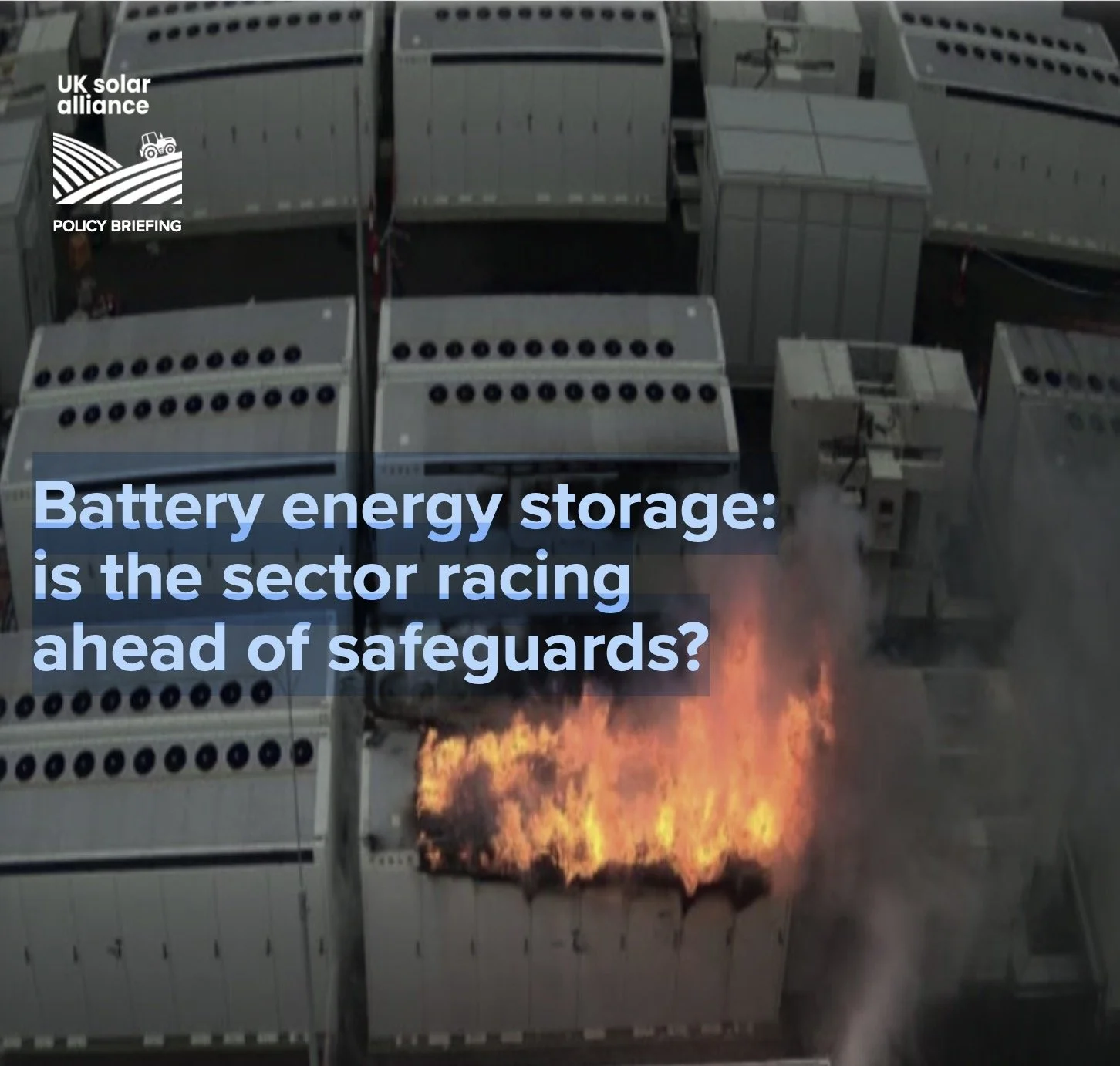
Grid-scale lithium-ion battery energy storage systems can play a part in supporting short term grid flexibility – but they come with serious, and increasingly visible, risks. The UK is on course for a series of major battery storage-related incidents unless the government acts urgently.
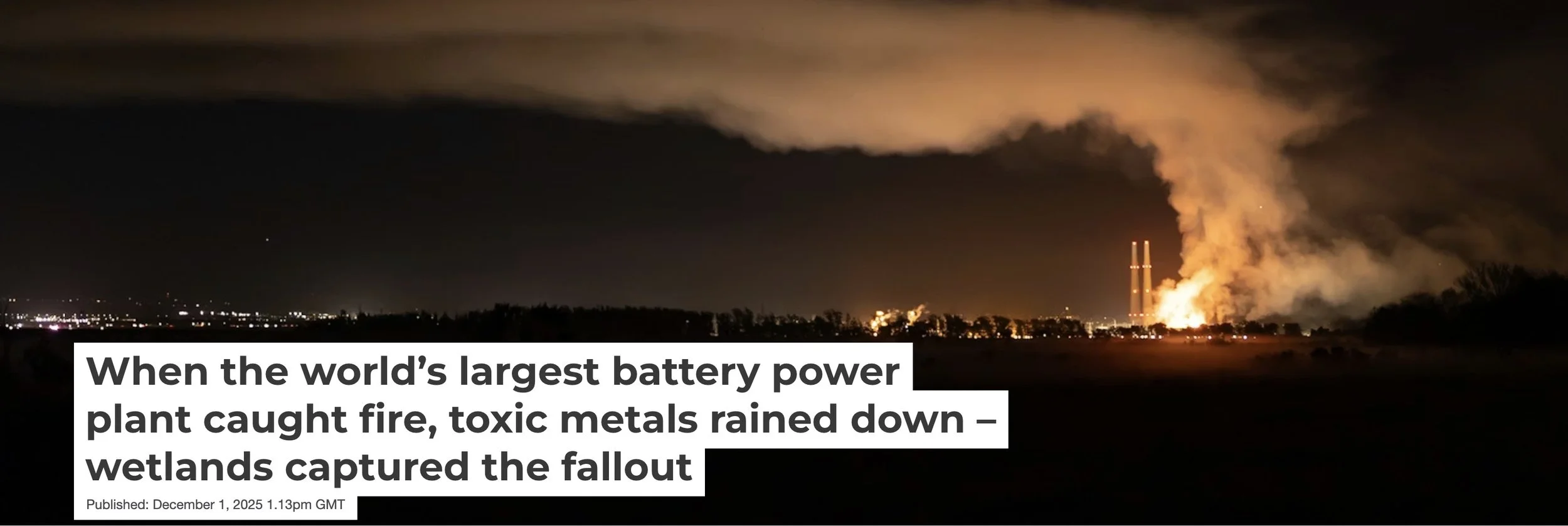
A lithium-ion battery storage fire is unlike any other. When batteries go into thermal runaway, an uncontrollable, violent chain reaction phenomenon typically triggers fires and even explosions. Highly toxic and flammable gases are released and the millions of litres of water used by firefighters can result in contaminated firewater run-off. Fires can reignite days or even weeks later
Lithium-ion battery storage systems are now planned on an unprecedented scale. Many are heading for rural locations, alongside utility-scale solar schemes and very close to environmentally sensitive sites and residential areas, especially when near National Grid substations. According to trade figures, by the end of 2024, the UK had 7GWh of grid-scale battery energy storage online. But sector data suggests the current planning and construction pipeline in the UK is an astonishing 444GWh – that’s significantly more than the cumulative global capacity at the end of 2024
The enormous pipeline and pace of the lithium-ion battery storage rollout is driven by the current rush to deliver the energy transition. Developers in this fast-growing market are incentivised by the prospect of highly profitable energy arbitrage, and encouraged by a policy framework that heavily promotes and prioritises renewables infrastructure
This massive market push is not yet underpinned by a proper, legally-enforced government safety framework, despite the well known hazards and risks. Without action on regulations, standards and oversight, the hurried, mass-scale deployment of lithium-ion battery storage could become a ‘Grenfell’-style failure of the energy transition
Read the full story here.
Are BESS Safe? NO!!
BESS Failure Event Database
This is a public resource for documenting publicly-available data on battery energy storage failure events from around the world.
All information included is available in the linked public documents - here
Kevin Howlette -Through the Gear:The Hidden Threats Firefighters Face fromToxins and Evolving Hazards
In this video, “Kevin Howlette” presents “Through the Gear: The Hidden Threats Firefighters Face from Toxins and Evolving Hazards”, as the Director of projects, EHS International, Ireland.
The workshop, titled “Understanding the Movement of Toxic Chemicals through Firefighters Protective Clothing and PPE” was held on Tuesday, 12-Aug-25, as a part of InToxFIRE project in Ulster University (UK), funded by UL Research institutes (ULRI).
Watch the video here
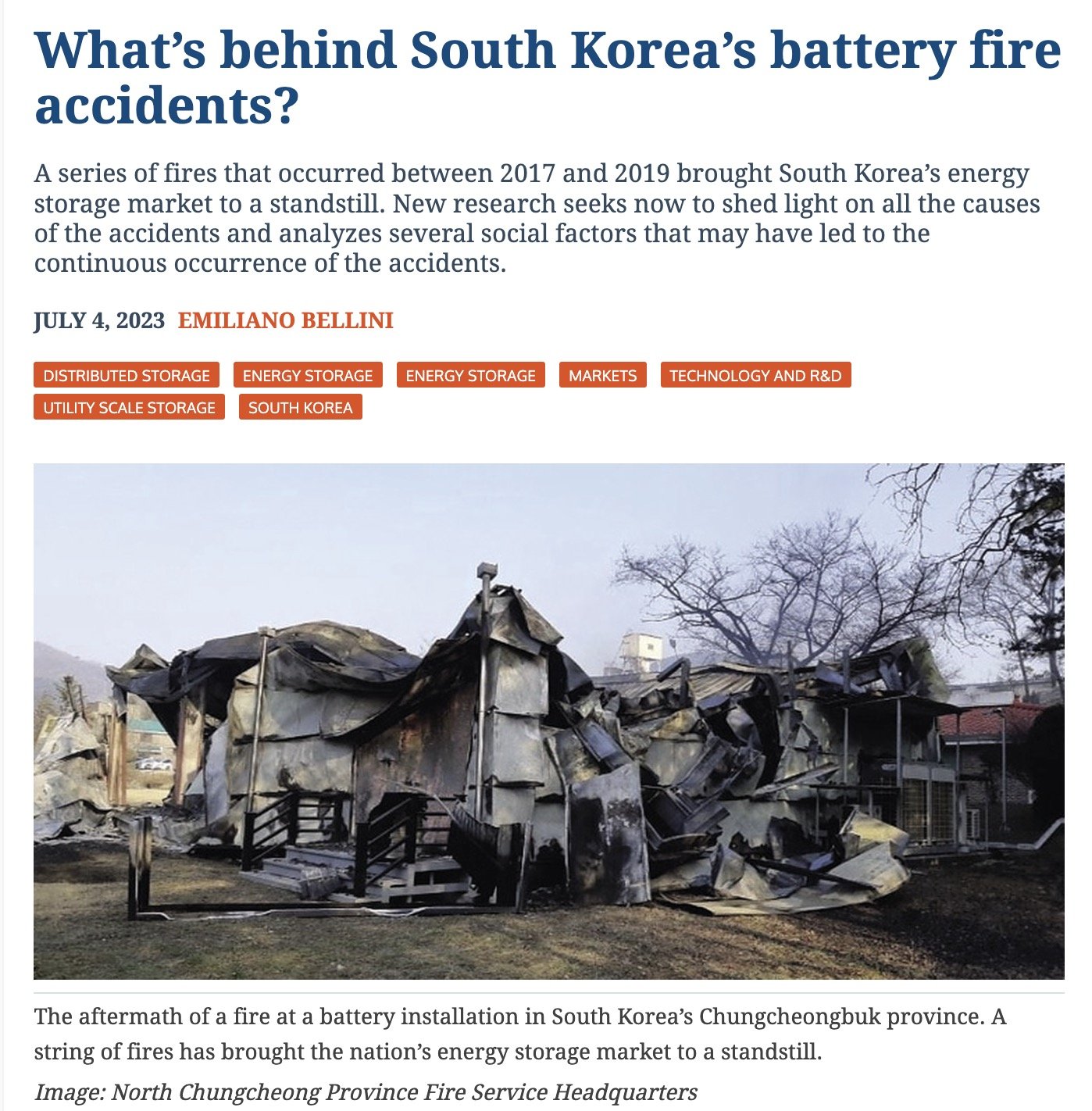
What’s behind South Korea’s battery fire accidents?
A series of fires that occurred between 2017 and 2019 brought South Korea’s energy storage market to a standstill. New research seeks now to shed light on all the causes of the accidents and analyzes several social factors that may have led to the continuous occurrence of the accidents.
Read article here
Proposal: Standard for Battery Energy Storage Systems (BESS) - by Richard Dunbar
July 2025
This document outlines a proposed draft standard for Battery Energy Storage Systems (BESS) currently in operation or under development across the United Kingdom. There is growing concern that existing UK regulations inadequately address the safety and environmental risks associated with BESS installations, especially in the context of government risk management policies. Numerous international incidents have demonstrated that BESS installations pose significant risks to human life, animal welfare, and the environment.
It is important to note that the enactment of the Regulatory Reform (Fire Safety) Order 2005 resulted in the repeal of numerous fire safety provisions, including locally enacted legislation that previously mandated fire authority consultation during planning applications. This shift has contributed to a systemic erosion of fire safety standards, as evidenced by investigations into major incidents such as the Grenfell Tower fire. These regulatory changes were ostensibly designed to streamline development but have had the effect of weakening public protections and undermining emergency service preparedness.
Richard Dunbar is the Managing Director of Park Lodge International Ltd, known for its expertise in fire investigation and emergency response training.
He previously served as Chief Fire Officer in Dar es Salaam, Tanzania, and Nairobi, Kenya, where he established comprehensive fire, rescue, and ambulance services based on UK standards.
He founded the International Vehicle Fire Investigation course, which has been running for over 25 years and is now delivered globally.
He co-authored the Energy Institute’s code of practice for recovering low flash products from road tankers and wrote several key texts, including the Police Blue Book on HAZMAT incidents and fire investigation handbooks.
His work spans Europe, Africa, and the Middle East, and he’s been involved in counter-terrorism exercises for the UK Foreign and Commonwealth Office.
In recent years, he’s focused on fire risks associated with alternative fuel vehicles, including electric vehicle fire investigation and safety protocols.
Download the full report here